Nuclear energy boasts the smallest carbon footprint among all power generation sources.
Uranium plays a pivotal role in the pursuit of achieving net-zero emissions, offering a distinct advantage absent in certain renewable energy sources: the ability to provide consistent and reliable baseload energy production.
At COP28, over 20 countries launched a declaration to triple nuclear energy capacity by 2050, aiming to achieve net-zero emissions and limit global warming to below 1.5°C.
One uranium pellet yields energy equivalent to 120 gallons of oil, 1 ton of coal, or 17,000 cubic feet of natural gas.
Nuclear power stands out as one of the most dependable and safest sources of energy.
“Nuclear power, renowned for its low carbon footprint and reliable energy generation, emerges as a key plater in the clean energy transition.”
Henri Paillere Head, Planning & Economics Studies Section, IAEA
The Global Uranium Market
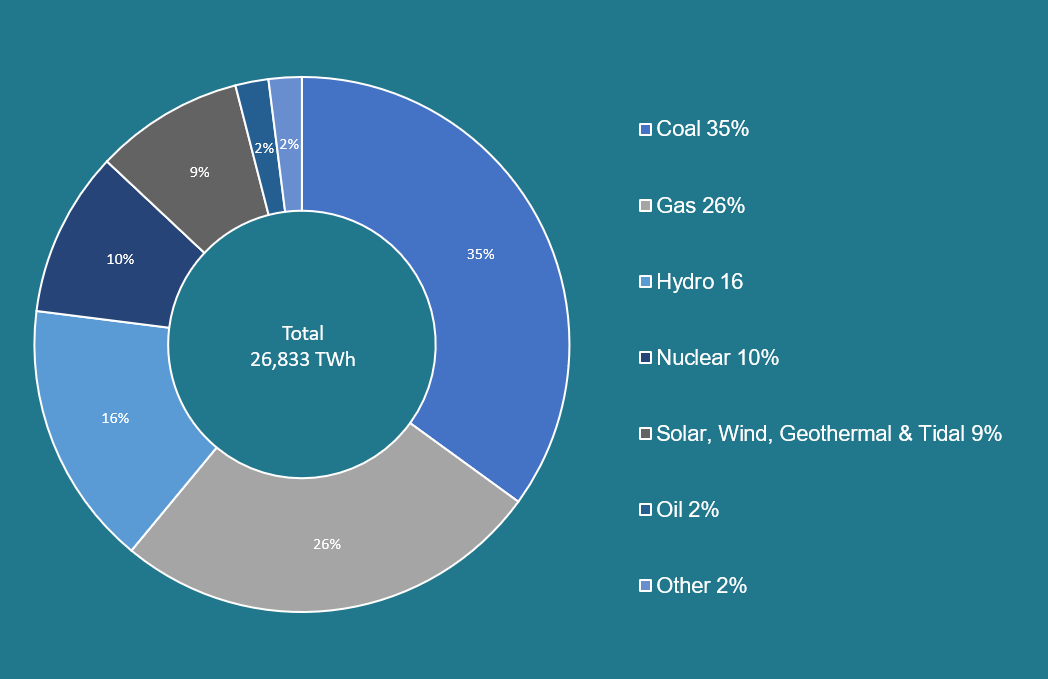
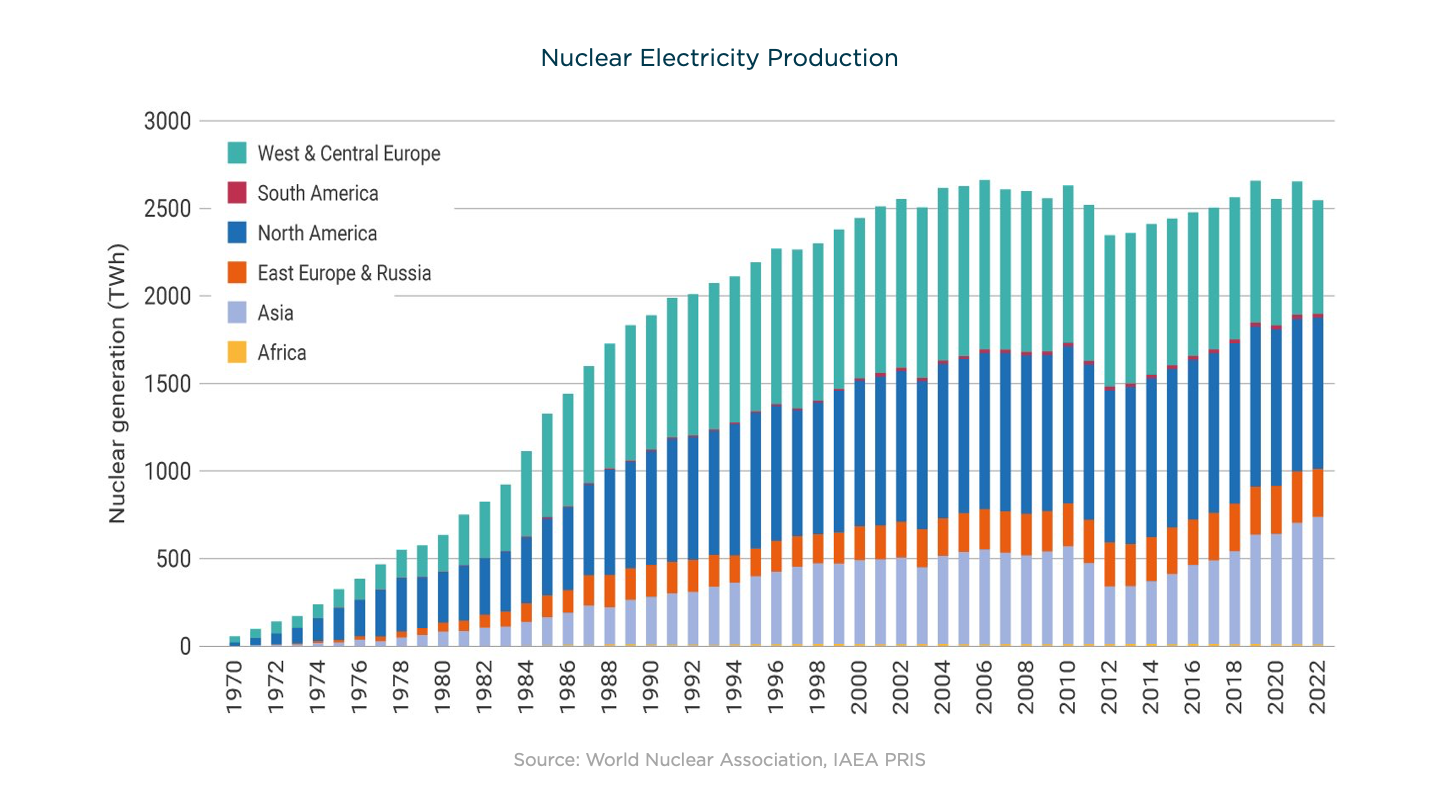
Nuclear energy provides about 10% of the world's electricity from about 440 power reactors
Nuclear provides an estimated one-quarter of the world’s low-carbon electricity
Nuclear is the world's second largest source of low-carbon power (26% of the total in 2020)
Over 50 countries use nuclear energy in ~220 research reactors
As of December 2023, there are 436 operable reactors and 173 reactors under construction
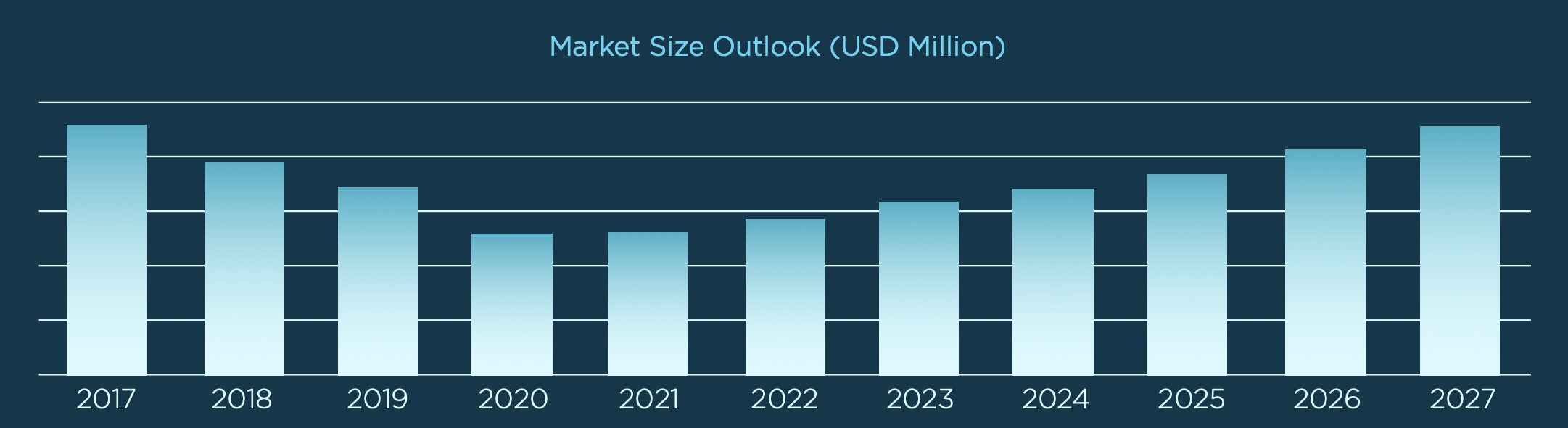
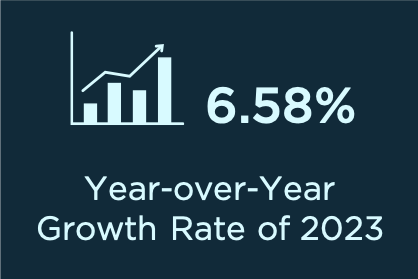
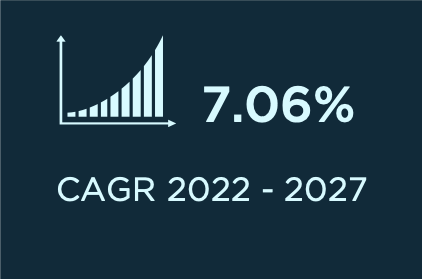
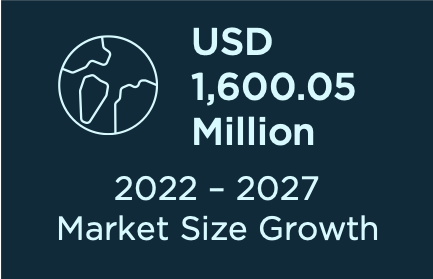
Uranium Market Size & Forecast
Canada & USA Uranium Market
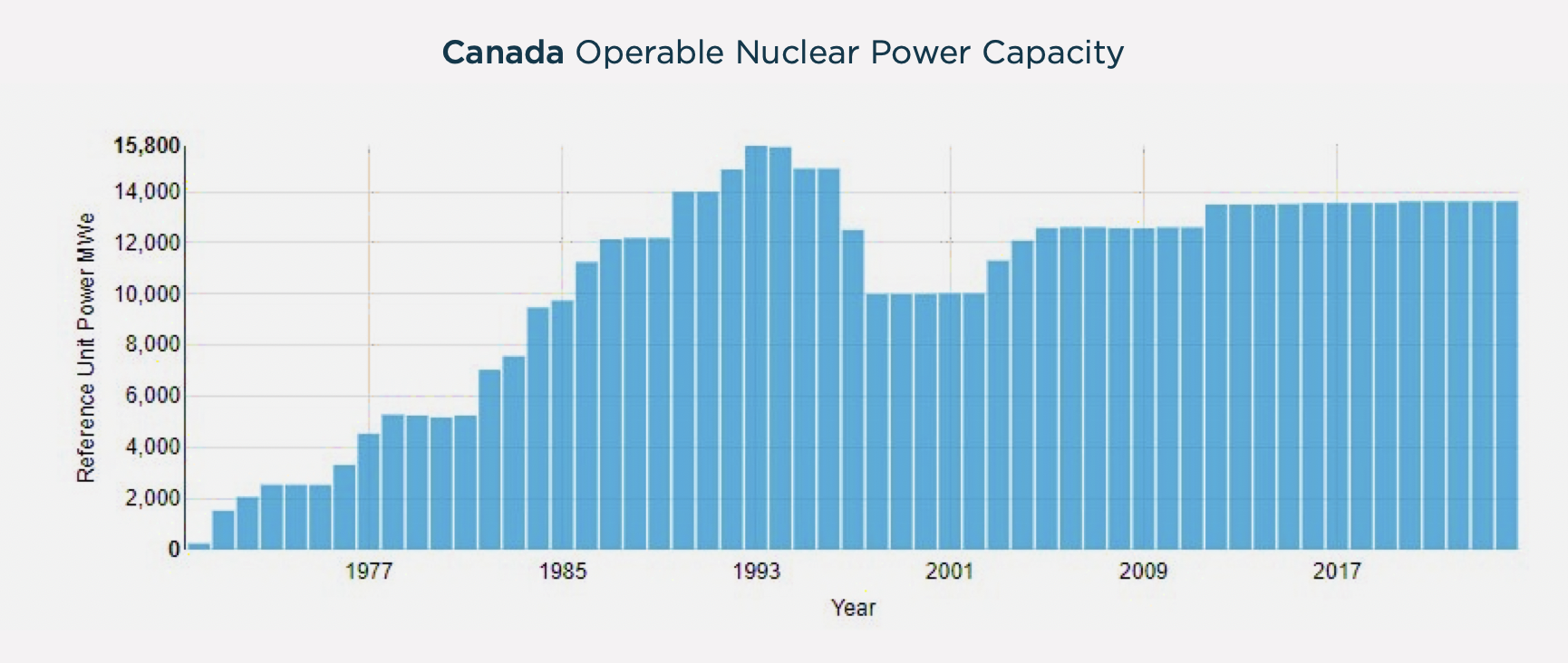
Approximately 15% of Canada's electricity is generated from nuclear power, facilitated by 19 reactors.
Canada boasts the world's largest deposits of high-grade uranium, with grades reaching up to 20%, a significant increase compared to the global average.
Plans for expanding nuclear capacity in Canada include the construction of two new reactors over the next decade.
Canada ranks fourth globally in uranium resources, following Australia, Kazakhstan, and Russia.
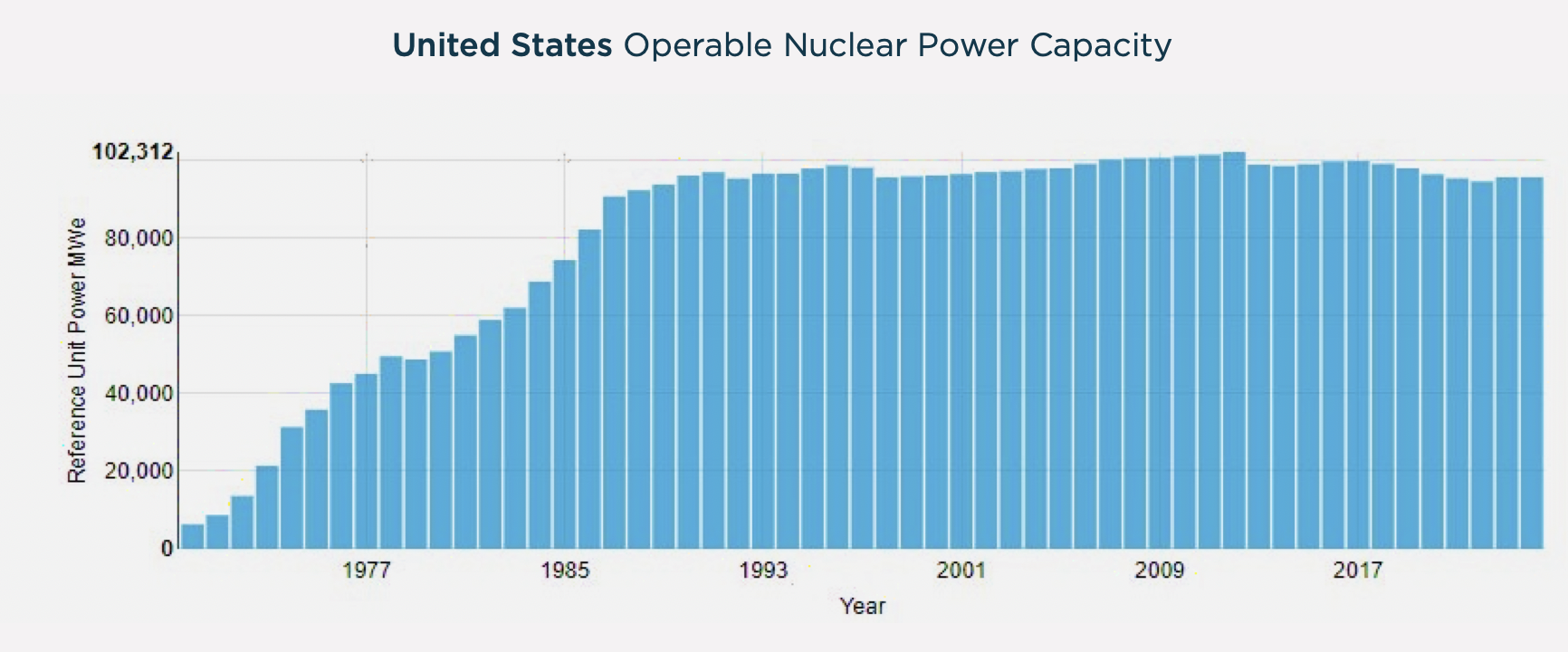
The USA leads as the largest global producer of nuclear power, contributing approximately 30% of worldwide nuclear electricity generation.
In 2022, US nuclear reactors generated 772 TWh, accounting for 18% of total electrical output.
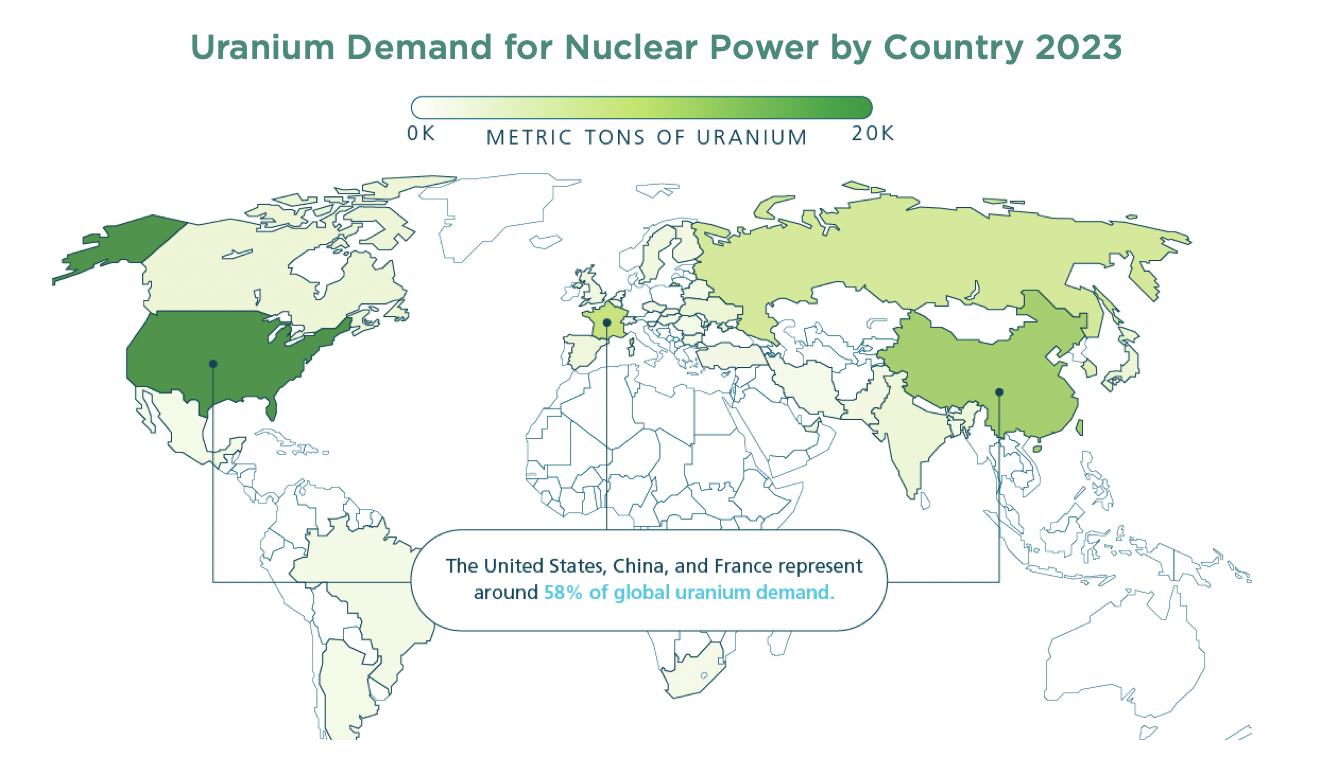
Alongside China and France, the USA collectively represents nearly 58% of global uranium demand.
The Inflation Reduction Act supports existing and new nuclear development in the USA, providing investment and tax incentives for large existing nuclear plants, advanced reactors, high-assay low enriched uranium (HALEU), and hydrogen production.
Demand Outweighing Supply
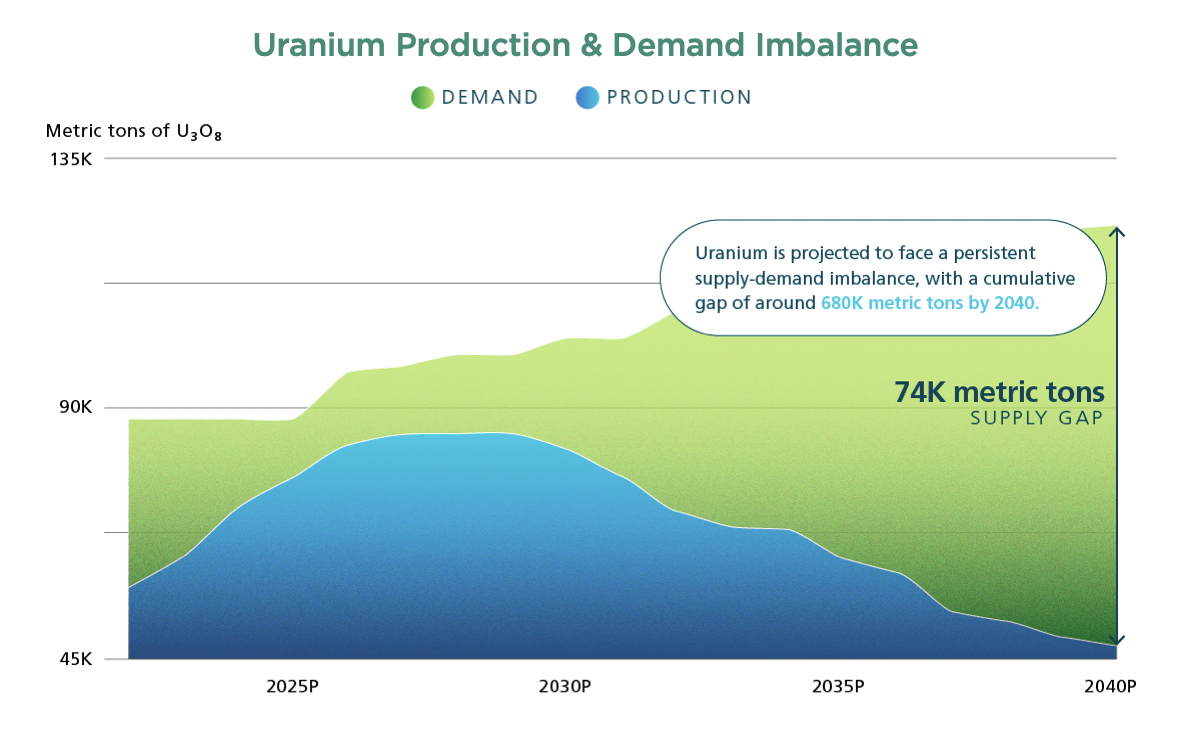
Projected Imbalance: Uranium faces a significant supply-demand gap, with an expected cumulative deficit of around 680k metric tons by 2040.
Production Concentration: In 2022, Kazakhstan, Canada, Namibia, and Australia collectively controlled over 70% of global uranium production.
Rising Demand: Demand for uranium in nuclear reactors is projected to surge, with estimates indicating a 28% increase by 2030 and nearly doubling by 2040, primarily driven by government initiatives to scale up nuclear power capacity.
Supply Challenges: Reactivating mines is crucial for short-term supply augmentation, recognizing the lengthy 10-15 year timeline for operational readiness.
Athabasca Basin Region
The majority of Canada's reserves are situated in the Athabasca Basin of northern Saskatchewan, known for hosting the world's largest high-grade uranium deposits, with grades ranging from 10 to 100 times higher than the global average.
The Athabasca Basin contributes to 15.5% of the world's annual uranium production.
McArthur River is the world’s largest high-grade uranium mine, combined with Rabbit lake they produce 23.4 million pounds of the world’s uranium.
Discovered in the 1940s, the Athabasca Basin has been actively producing uranium for over 80 years.
Saskatchewan ranks third globally in the Fraser Institute's assessment of top mining jurisdictions to invest in.
Sources: National Resources, Canada, Visual Captialist: Athabasca Basin, The World’s Highest Grade Uranium District, Fraser Institute
Small Modular Reactors (SMRs)
The global market for SMR technology is about $400 to $600 billion, according to Stantec.
In 2021, Trump proposed a USD $1.2 billion budget for advanced nuclear energy research and development and the Biden administration’s Energy department invested more than $1 billion into research and development of reactors to fuel sources.
By collaborating with industry leaders such as Cameco Corp. (TSX: CCO), NexGen Energy Ltd., Orano Canada Inc., Forum Energy Metals Corp. (TSX.V: FMC), Global Uranium leverages extensive expertise in uranium exploration and extraction, ensuring high-quality uranium production tailored for SMR technology.
Global Uranium’s Canadian & US based projects have the potential to supply a steady stream of uranium, which is essential for fueling Small Modular Reactors (SMRs). SMRs require consistent and reliable fuel sources to maintain uninterrupted power generation.
Sources:
Government of Canada: SMR Action Plan
RBC: Canada’s Big Plans for Small Modular Nuclear Reactors
Forbes: U.S. Government Helps Nuclear Energy Allies Catch Up to Russia, China